Reliable Gas Services for Your Property
Gas Safety checks
We carry out Gas Safety checks for landlords and homeowners, including comprehensive Gas installation inspections.
These certified inspections involve checking the working condition of all the appliances, ensuring adequate air ventilation, and confirming that flues or chimneys are not leaking dangerous carbon monoxide.
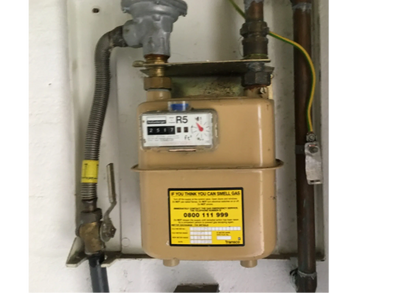
The gas meter's location is checked, and its gas working pressure is recorded with all appliance(s) on. If any safety issues are identified, Cadent (Gas Emergency Centre) is called to rectify the problem.
During these gas safety checks, appliances should have their safety devices tested, inlet gas pressure or gas rate recorded, and a combustion analysis is performed to confirm safe operation.
Please note: The gas pipework in your rented property must be maintained in a safe condition. While installation pipework is not covered by the annual gas safety check, the HSE recommends that when you request a gas safety check, you ask your Gas Safe registered engineer to conduct gas tightness testing on the whole gas system, which includes installation pipework, and visually inspect the pipework as far as reasonably practicable. This additional service will incur extra costs due to the extra work involved.
Finally, a digital inspection certificate is produced, signed by the inspection engineer and the property owner, representative, or tenant, which can be easily sent via email. For more detailed information, click on the highlighted text or see below.
Testing the gas installation
New gas tightness testing procedure!
If a customer or landlord requests a gas tightness test for their gas installation, please be aware that the method of testing has changed since March 2026.
Under the old industry standards, a drop in pressure detected during a gas installation inspection with existing gas appliances did not require confirmation of the source being the pipework. However, the new 2026 industry standards amend this requirement, stipulating that if a drop in pressure is observed, the engineer must determine that it is not due to the installation pipework.
During the initial gas tightness testing, if a drop in test pressure greater than 0.25mb is recorded in the system, all appliances must be isolated, and the pipework should be tested independently. If there is no drop in test pressure, a PASS report can be generated and emailed to you while the engineer is on site. Appliances can then be reinstated, provided there is no smell of gas and a risk assessment is conducted in line with the new standards. More info below.
If a leak is found on the pipework during gas safety checks, the customer, landlord, or letting agents will need to decide whether to carry out remedial work or to shut off and cap the gas installation. The installation cannot be left active under any circumstances.

Gas Tightness Test
Gas Safe Registered

PlumbRight Reports and Certificates
Flue Gas Analyser

Our Flue gas analyser report with signed householders and engineers names.
The job location, date and the Ratio CO CO2 highlighted in Green if Passed.
Working Pressure
This is our working pressure report, which includes Gas installation inspection results. Note the Red visual display indicating that the test has failed, highlighting the importance of thorough Gas Safety checks. Customers can easily understand these reports, including the Gas tightness testing outcomes.
Flue Analyser screen
The reports generated for gas installation inspections and gas safety checks are colour coded to visually indicate whether the test results have PASSED green, FAILED red, or NEEDS MONITORING Amber, including results from gas tightness testing.
Flue Analyser screen
The software screen displays live gas pressure readings and flue gas ratio results in green, essential for gas installation inspections. The report, which is time, date, and GPS stamped, provides verification of when and where the job was completed, ensuring compliance with necessary gas safety checks and gas tightness testing.
Let-By + Tightness
Let-By + Tightness
Our Let-By and gas tightness test report includes comprehensive results from our gas installation inspection. A successful pass will be highlighted in green. You can easily save, email, or print the reports after performing the necessary gas safety checks—the choice is yours.
TPI Software
Let-By + Tightness
Our TPI View software connects testing equipment to our laptops for comprehensive gas installation inspection. Reports on Let-By, Gas Tightness testing, Working Gas Pressure, and Flue Gas Analyser are conveniently sent to the customer's email address, allowing them to save or print the results easily, ensuring thorough Gas Safety checks.
Gas Safety Certificate
Gas Safety Certificate
Gas Safety Certificate
This is our industry standard Gas Safety Certificate, which landlords and homeowners receive via email after we complete essential Gas installation inspections, Gas Safety checks, and Gas tightness testing. All our certificates, quotes, invoices, and payment receipts are produced using our Gas Engineer Software.
Gas Service Record
Gas Safety Certificate
Gas Safety Certificate
Our Gas Service Record is professional and includes all the appliance details, guidance on systems, and recommendations, as well as documentation of all safety checks conducted, including gas installation inspections, gas safety checks, and gas tightness testing.
Gas Breakdown Record
Gas Safety Certificate
Gas Breakdown Record
Our Gas Breakdown Report complies with 26.9 of the Gas Regulations and includes comprehensive gas safety checks. All safety checks are recorded alongside the appliance or system breakdown location and parts fitted. This information is stored for future reference using GES Software, ensuring reliable gas tightness testing as well.