We carry out Gas Safety checks for landlords and homeowners.
These certified inspections involve checking the working condition of all the appliances, making sure the air ventilation is adequate, the flues or chimneys are not leaking dangerous carbon monoxide.
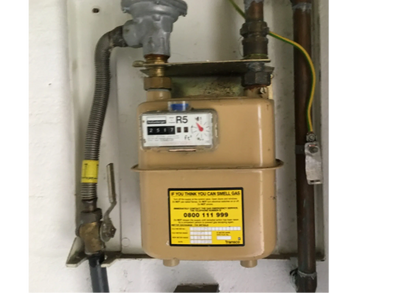
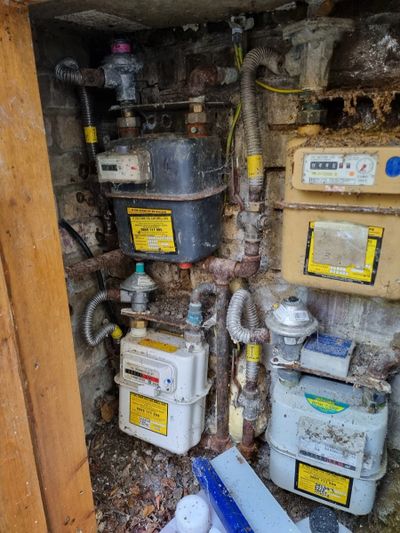
The gas meters location should be checked and it's gas working pressure recorded with all the appliance on and if deemed not safe Cadent called to rectify the problem.
Appliances should have their safety devices tested, inlet gas pressure or gas rate recorded and a combustion analysis taking to confirm safe operation.
Please note: The gas pipework in your rented property must also be kept in a safe condition. Installation pipework is not covered by the annual gas safety check, but the HSE recommend that when you request a safety check, you ask your Gas Safe registered engineer to:
Finally a digital inspection certificate is produced signed by the inspection engineer and property owner, representative or tenant, which can be easily sent via email. For more detailed information click on the highlighted text or see below.
If a customer or landlord requests a gas tightness for their gas installation, please be aware that the method of testing has changed since the March 2026 Standards.
The old standards were confusing and the allowance of a 4-8mbar drop in pressure while testing was incorrectly applied to the whole gas installation (pipework and appliances), if there was no smell of gas.
The new standards now puts the onus on the gas engineer to prove that there is no gas leaks on the pipework.
The engineer will now have to test the pipework separately from any connected appliance/s and a report generated
NO gas leaks are on the pipework, which means a separate test for the gas pipework while the appliance/s are isolated. If a leak is found on the pipework the customer, landlord or letting agents will now have to decide if remedial work is to be carried out or the gas installation be shut off and capped.
Gas safety is important all year round, but it is not always a household’s top priority.
Gas Safety Week, usually every September - coordinated by Gas Safe Register - it is a good communications resource for anyone who uses gas and provides valuable tips to help you stay safe at home.
Please reach us at tony.plumbright@gmail.com if you cannot find an answer to your question.
Carried out annually as per manufacturer's instructions, typically consisting of:-
Carried every 5 years or if boiler history is unknown or required due to safety concerns, dependent on manufacturer and typically consisting of everything carried out on a Standard Boiler Service plus:-
A gas safety check isn't just for boilers, but should be conducted on all the gas appliances connected to that properties gas meter and gas supply pipework, i.e. cookers, hobs, gas fires and water heaters.
Landlords who have tenanted property have a legal obligation to have a safety check conducted every 12 months.
Sellers of property in the UK will be asked by their solicitor to provide proof of gas safety of all gas appliances in that property.
Home owners should have periodic checks conducted of their gas appliances for their own peace of mind.
A safety check should includes all of the checks and tests to ensure the appliance is safe to operate, for example:
Where an engineer performs work on a gas appliance, they shall immediately thereafter examine:
a. the effectiveness of any flue
b. the supply of combustion air
c. its operating pressure or heat input or, where necessary, both
d. its operation so as to ensure its safe functioning
Useful information for anyone with a flue concealed within a ceiling space or wall.
Since January 2011, your gas engineer should have made you aware of the need for inspection hatches, to examine the whole length of the flue system, while carrying out a Service or Gas Inspection.
If the engineer cannot examine the whole length of the flue they will advise you, in line with industry guidance, that it is 'At Risk', recommend that you do not use it and will ask your permission to turn it off.
As a consumer you are within your rights to refuse permission for it to be turned off, however you will be asked to sign paperwork to confirm you accept responsibility for those defects identified in the system – in this case, the potential for fumes to escape unnoticed from the concealed flue into the property.
Your gas engineer can continue to work on your boiler including servicing it and undertaking maintenance work
I use Gas Engineer Software for job management to generate professional-looking paperless CP12 Gas Safety Records (Landlord/Homeowner), Gas Service Records, Gas Breakdown Records, CP14 Gas Warning Notices, Job Sheets, Quotes and invoices.
I also use TPI software to record and report when performing combustion analysis, working gas pressure of the appliance being worked on and for Let-By tests, Gas tightness tests, working gas pressure tests all at the gas meter. The reports issued are all colour coded with results in Green for good or Red for something needs to be done.
All paperwork is saved securely in the cloud and sent via email, A digital cert takes seconds to share, won’t be lost, and can always be printed or re-sent.
Gas cookers either built-in or freestanding can incorporate various types of appliances, this includes a hob, a grill, single or double ovens. When testing, each appliance will need to have their flame safety device, gas rate, combustion tested with an analyser, thermostats and oven seals checked. When conducting a gas safety inspection I record all the individual appliances within the cooker and the above tests.
Copyright © 2026 Plumbright Services Ltd - All Rights Reserved.